
Pregnancy can make an ordinary morning routine feel very different. The toothpaste you have used for years suddenly turns your stomach, or your gums bleed even though you are trying to keep up with cleaning. So you may have a few questions about oral health during pregnancy that weren’t on your list before.
If you are expecting another child, questions about your baby’s teeth may arrive before the baby does. Here at Austin Pearls Pediatric Dentistry in Austin, Texas, Dr. Chang Ryu, Dr. Michelle Kim, and our team help parents prepare for feeding, cleaning, and that first dental visit. We can also explain pregnancy-related mouth changes, while adult dental treatment continues with the clinicians who provide your care.
Hormones Can Make Gums More Sensitive to Plaque
During pregnancy, hormones can make your gums react more strongly to plaque, the bacterial biofilm that collects on teeth. Your body sends extra blood and immune cells to defend against those bacteria, leaving the gums swollen and more likely to bleed. However, repeated bleeding still needs a gum exam during pregnancy, since the cause affects how it is treated.
We call this gum inflammation pregnancy-related gingivitis. Cleaning gently with a soft toothbrush and cleaning between the teeth helps remove the plaque that keeps the reaction going. At a dental exam, the clinician checks whether the swelling affects only the gums or whether deeper gum disease or another problem needs treatment.
Another change you may notice is a pyogenic granuloma, a soft red growth on the gum (the name sounds worse than it is). It is a noncancerous overgrowth of tissue with many tiny blood vessels, so it can bleed easily when you clean near it. Pregnancy hormones can increase the gum’s response to irritation, such as plaque, and contribute to the growth. A new lump still needs a dental examination to confirm the cause and discuss treatment if it bleeds frequently or interferes with eating.
Nausea and Vomiting Can Expose Teeth to Acid
While hormones affect the gums, nausea and vomiting can affect the teeth by exposing enamel to stomach acid. Brushing immediately can add abrasion while that surface is still softened. Instead, rinsing with water and allowing time before brushing can help clear the acid without immediately scrubbing the teeth.
If you are vomiting often, bring it up with your prenatal care clinician and at your dental appointment. The medical team can help with nausea and hydration, while dental care can help protect enamel from repeated acid exposure. New sensitivity when you drink cold water, or a rough feeling along the teeth, may mean the acid is beginning to affect the surface.
If reaching the back teeth triggers gagging, try a smaller toothbrush head and clean at a time when the nausea has eased. A milder-flavored fluoride toothpaste may be easier to tolerate than the mint you used before pregnancy. You might have to move cleaning away from your usual morning time for a while, but keep working toward twice-daily cleaning and ask for help if nausea makes that difficult.
Frequent Snacks Can Change Cavity Risk
Meanwhile, smaller, more frequent meals may help with nausea or fit your prenatal nutrition plan. From the dental side, each exposure to sugars or starches gives plaque bacteria another opportunity to produce acid. Constantly sipping a sweet drink can stretch those exposures across the afternoon.
If crackers help settle your stomach, you do not have to give up the food you can manage. However, starch left on the teeth gives plaque bacteria something to use, so keep up with cleaning and choose water between snacks when possible. For nutrition questions, follow your prenatal clinician’s advice, then bring any concerns about frequent snacking to your dental appointment.
You may have heard that a baby takes calcium from your teeth. The calcium in erupted teeth stays there; the increased risk of cavities comes from changes in eating, saliva, acid exposure, and cleaning. Addressing those changes helps protect your teeth while you manage the rest of pregnancy.
Dental Care Can Continue During Pregnancy
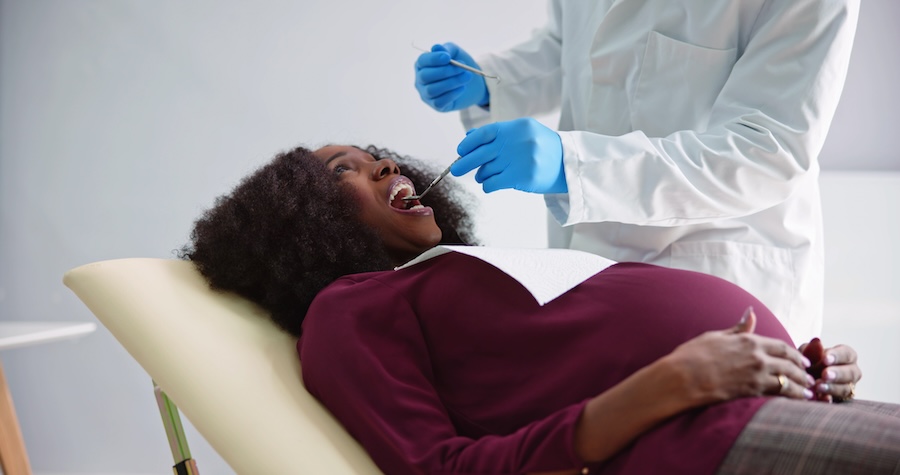
With those changes happening, dental exams, cleanings, and needed repairs can generally continue throughout pregnancy. Dental X-rays and local anesthesia can also be used when needed, with treatment planned around your health. If a tooth hurts or you notice swelling, arrange dental care during pregnancy rather than letting an infection wait until after delivery.
At dental appointments, share how far along you are and bring your medication list and prenatal clinician’s contact information. If the pregnancy involves medical complications, the dental and prenatal teams can coordinate care. They can also check pain medicines and antibiotics before prescribing them, since the choice depends on your pregnancy and health history.
Later in pregnancy, reclining for a long appointment may leave you uncomfortable or lightheaded. Let the treating team know so they can change your position, give you a break, or plan shorter visits. Even if you feel fine at first, speak up if nausea or dizziness develops while you are in the chair.
Plan Dental Visits Before the Baby Arrives
If you have a filling or other treatment waiting, ask about completing it during pregnancy. Once the baby arrives, a toothache can be much harder to manage between feeds and recovery. Taking care of a known problem now can spare you an urgent appointment during those first busy weeks.
Keep using fluoride toothpaste and cleaning between your teeth, along with the nutrition plan from your prenatal clinician. If you are considering a new rinse or supplement, check its ingredients with the clinician managing your care first. When nausea or swollen gums are making cleaning difficult, adjusting the technique or flavor may help more than adding several new products to the bathroom shelf.
Plan for Your Baby’s First Teeth
As you prepare for the baby, plan the first dental visit for when a tooth appears and no later than the first birthday. At that age, we check the developing mouth and talk through feeding and cleaning with you. If your baby protests or needs a break, the visit still helps them get used to us; we build on that familiarity over time rather than expect a perfect cleaning on the first day.
Once your child’s first tooth comes in, begin brushing with a tiny smear of fluoride toothpaste, about the size of a grain of rice. At their visit, we can show you how much to use and how to reach those small teeth, even when they would rather chew on the toothbrush. As more teeth arrive, we’ll also talk through their care, including cleanings and exams and, when needed, X-rays with small sensors made for children’s mouths. Depending on their age and cavity risk, we may recommend fluoride treatments to strengthen enamel or sealants to protect the grooves in their back teeth. If we find a cavity, we’ll explain how we can repair it and help protect that tooth as your child grows.
Preparing for Your Growing Family in Austin
If you have questions about caring for your baby’s first teeth, bring them to our Austin Pearls Pediatric Dentistry team in Austin, Texas. Schedule the first visit when a tooth appears or by the first birthday, and we will go over cleaning, feeding, and what to expect as more teeth arrive. We look forward to getting to know your growing family and helping you care for those first little teeth!