
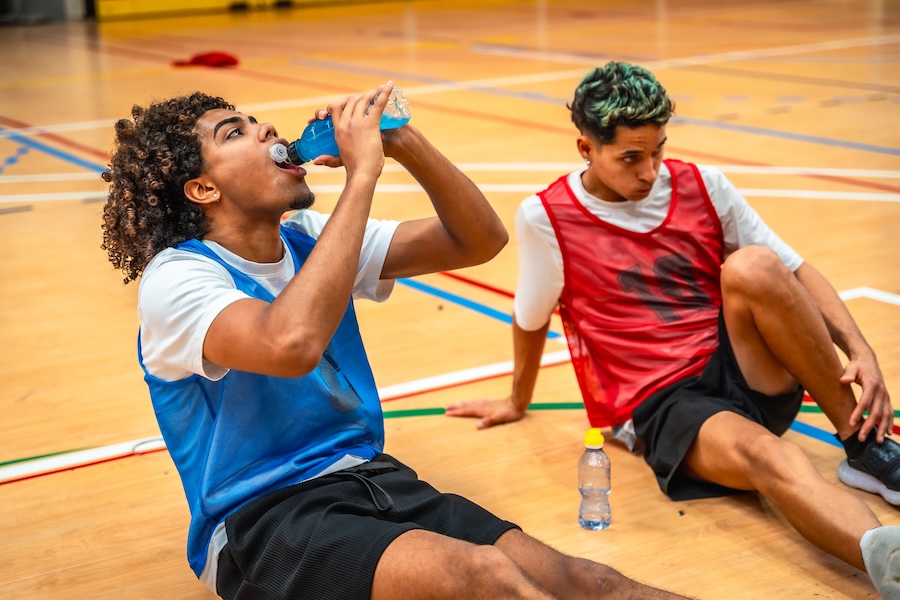
It’s a hot afternoon, practice just wrapped up, and your child grabs a brightly colored sports drink from their bag.
It makes sense in the moment. They’ve been running around, sweating, and need something to rehydrate. Water feels a little boring, and sports drinks are everywhere—on the sidelines, at games, in team coolers. It’s easy to assume they’re the right choice for active kids.
The part that doesn’t get talked about as often is what those drinks are doing to your child’s teeth, especially when they become a regular habit instead of an occasional one.
What’s Actually in Sports Drinks
Sports drinks are designed to replace fluids and electrolytes, but they also tend to contain sugar and acid.
The sugar feeds bacteria in the mouth, which produce acids as a byproduct. At the same time, the drinks themselves are already acidic. That combination—sugar plus acid—creates an environment where enamel can start to break down more easily.
For kids, this matters even more because their enamel is still developing. It’s not as strong as adult enamel yet, which means it can be more vulnerable to repeated exposure.
Why They Can Be Tough on Teeth
It’s not just what’s in the drink—it’s how it’s consumed.
Kids often sip sports drinks over a longer period of time, especially during practices or games. That means their teeth are exposed to sugar and acid again and again, instead of all at once. Each sip restarts that exposure, which gives enamel less time to recover.
Over time, that repeated contact can lead to enamel erosion, increased sensitivity, and a higher risk of cavities. It doesn’t usually happen overnight, which is why it can go unnoticed until there are visible changes.
How They Compare to Soda and Juice
A lot of parents are surprised to learn that sports drinks can be just as harsh on teeth as soda.
While they may be marketed as a healthier option, many sports drinks have similar acidity levels. Some also contain comparable amounts of sugar, depending on the brand.
Juice falls into a similar category. Even though it sounds like a more natural option, it still exposes teeth to sugar and acid. From a dental perspective, frequency matters more than the label on the bottle.
When Sports Drinks Make More Sense
There are situations where sports drinks can be helpful.
For longer or more intense activities, especially in hot weather, they can help replace electrolytes that are lost through sweat. In those cases, they can serve a purpose beyond just hydration.
For most everyday activities, though, water is usually enough. Kids don’t typically need sports drinks for short practices or casual play, even if they’re active.
Simple Ways to Reduce the Impact
You don’t necessarily have to eliminate sports drinks completely to protect your child’s teeth.
One of the easiest changes is to limit how often they’re used. Saving them for longer or more demanding activities can make a difference. Encouraging your child to drink them in one sitting instead of sipping over time also helps reduce prolonged exposure.
Rinsing with water afterward can help wash away some of the sugar and acid. Waiting a bit before brushing is also helpful, since enamel can be temporarily softened after acidic drinks. Dental sealants and professional fluoride treatments can also help add an extra layer of protection and reduce the risk of cavities over time.
What to Watch for Over Time
Early signs of enamel changes can be subtle.
You might notice teeth looking slightly duller or less shiny than before, or your child may mention sensitivity to cold foods and drinks. In some cases, white spots can develop along the teeth, which may be an early sign of demineralization.
Catching those changes early makes it easier to manage them before they turn into cavities.
Helping Kids Build Healthy Habits Without Overthinking It
Sports drinks are convenient, and kids enjoy them. The goal isn’t to make them off-limits—it’s to understand when they make sense and how to balance them with healthier habits.
Keeping water as the main option and treating sports drinks as occasional can go a long way in protecting your child’s teeth without making things complicated.
Pediatric Dental Care in Austin, TX at Austin Pearls Pediatric Dentistry
At Austin Pearls Pediatric Dentistry in Austin, TX, Dr. Chang Ryu and Dr. Michelle Kim help families navigate everyday habits like diet and hydration in a way that supports long-term oral health. Small choices, like how often sports drinks are used, can make a noticeable difference over time.
If you have questions about your child’s teeth or have noticed changes like sensitivity or white spots, it’s worth bringing them up at your next visit. A children’s dental exam can help catch early signs and keep things on track.